

Introduction
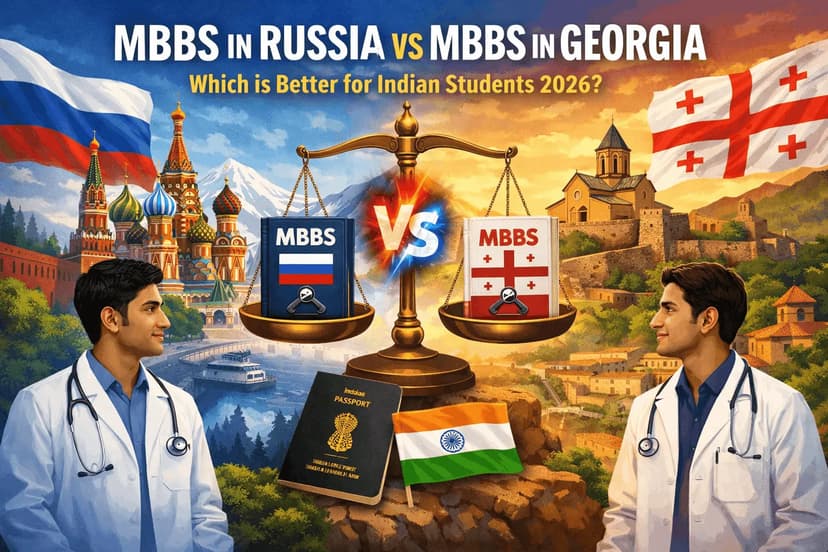
When an Indian student decides to pursue an MBBS abroad, two countries consistently top the list: Russia and Georgia. Both boast excellent medical universities, NMC recognition, and thousands of successful Indian alumni. However, the environments, cost structures, and educational systems in these two nations have distinct differences. In 2026, choosing the 'better' option comes down to matching a student’s budget, climate preferences, and long-term career goals.
1. Overview of Medical Education Systems
Russia is a global pioneer in medical sciences, boasting universities with centuries of history. It offers highly subsidized government medical institutions characterized by robust academic rigor and vast clinical infrastructures. Georgia, a smaller developing nation at the crossroads of Europe and Asia, has rapidly modernized its education sector by aligning heavily with European standards, offering smaller class sizes and premium private institutional environments.
2. Adherence to NMC Guidelines (2026)
Both countries firmly adhere to the latest National Medical Commission (NMC) regulations. They both offer medical courses completely in English for the entire 6-year duration (5.5 years academics + mandatory 1-year internship in the host country). Graduates from government-approved universities in both nations are fully eligible to sit for the FMGE/NEXT examination in India.
3. Tuition Fees and Total Budget Comparison
Cost is often the deciding factor. Russia provides tremendous value because most top medical universities are government-funded. The total tuition fees for six years in Russia generally range between ₹15 Lakh to ₹30 Lakh. Georgia predominantly features high-end private medical colleges. The tuition fees here are steeper, generally ranging from ₹30 Lakh to ₹45 Lakh for the complete course.
4. Cost of Living and Lifestyle
Russia's cost of living is highly affordable, averaging about ₹12,000 to ₹15,000 per month depending on the city. University hostels are inexpensive. Georgia, aspiring for deeper EU integration, has a slightly higher cost of living. Living expenses and private hostel rentals in Georgia will set a student back roughly ₹18,000 to ₹25,000 per month.
5. Clinical Exposure and Patient Flow
Due to its massive population and enormous government hospitals, Russia offers unparalleled clinical exposure. Students witness a vast array of medical cases. Georgia’s smaller population means less dense patient flow, but universities compensate with state-of-the-art simulation labs and highly focused, personalized clinical training inside their associated private clinics.
6. Weather and Climate Adaptability
Russia is renowned for its harsh, deeply freezing winters, with temperatures commonly dropping well below zero for months. All universities and hostels are centrally heated, but outdoor adaptability is required. Georgia enjoys a milder, more temperate climate with distinct, beautiful seasons, which Indian students generally find much more comfortable to adapt to.
7. Safety and Security for Indian Students
Safety is paramount for parents. Both nations are extremely safe for international students, boasting low crime rates and friendly locals. Universities in both nations mandate secure campus environments, CCTV surveillance, and strict hostel regulations, providing peace of mind to families back in India.
8. FMGE Success Rates
Both countries show excellent FMGE/NExT success rates. Success largely depends on the individual student's dedication and the specific university they attend, rather than the country itself. Top universities in both nations specifically train students according to Indian medical curriculum standards to prepare them for licensing exams.
9. Summary Comparison Table (2026)
| Feature | Russia | Georgia |
|---|---|---|
| Tuition | ₹15L - ₹30L | ₹30L - ₹45L |
| Living Cost | ₹12k - ₹15k | ₹18k - ₹25k |
| Course Link | View Russia | View Georgia |
| Success record | Watch Stories | Watch Stories |
| Climate | Very Cold/Harsh | Mild/Temperate |
| Clinical Exposure | High (Massive hospitals) | High (Simulation focused) |
10. Which Should You Choose?
If affordability and vast clinical exposure are your priorities, MBBS in Russia is the clear winner. If you prefer European standards and milder weather, MBBS in Georgia is the superior choice. See our success stories to help you decide.
Conclusion
There is no one-size-fits-all answer in the Russia vs. Georgia debate. Both nations are globally respected medical hubs for Indian students. The right choice depends on your financial constraints, tolerance for cold weather, and preference between government universities and modern private institutions.
Still Confused Between Russia and Georgia?
Let the experts help! Contact Imperial Overseas Consultants to compare specific universities and find the perfect match for your career aspirations and budget.
Compare Universities With ExpertsFrequently Asked Questions (FAQs)
Is MBBS from Russia valid in India?
Yes, MBBS degrees from NMC approved medical universities in Russia are entirely valid in India after passing the FMGE/NExT exam.
Which country is cheaper, Russia or Georgia?
Russia is significantly cheaper than Georgia regarding both tuition fees and the monthly cost of living. Russia relies on government funding while Georgia relies on private institutions.
Do I need to learn the local language?
While the entire MBBS academic course is taught in English in both countries, learning basic Russian or Georgian is mandatory to interact with local patients during clinical hospital rotations.
Similar Posts

Imperial Overseas Consultants – Pathankot's Most Trusted MBBS Abroad & Study Visa Experts
By Imperial Overseas Consultants
5/1/2026 | 12 min read
How to Identify a Genuine MBBS Abroad Consultant in Punjab – Red Flags & Checklist 2026
By Imperial Overseas Consultants
5/5/2026 | 14 min read
Study MBBS in Russia 2026 – Complete Guide for Indian Students: Fees, Universities & Admission
By Imperial Overseas Consultants
5/7/2026 | 13 min read