


Introduction
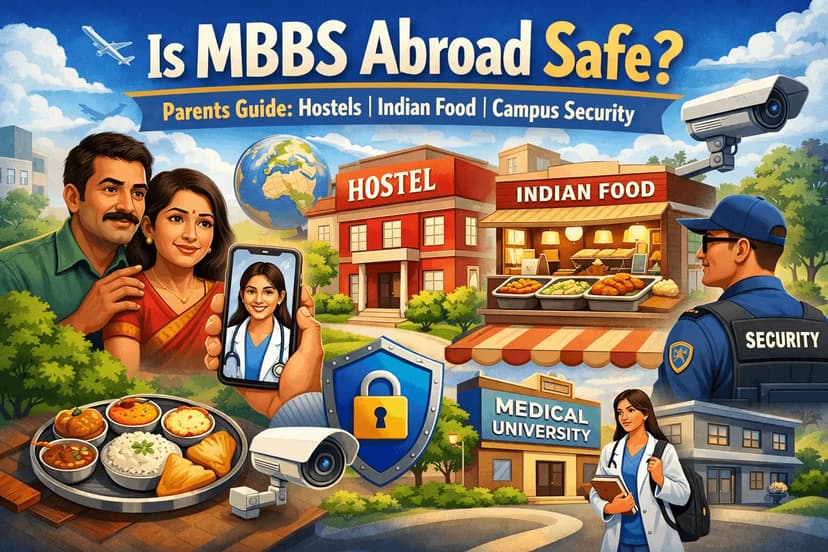
When sending an 18-year-old thousands of miles away, academic excellence momentarily takes a backseat to parental worry. 'Will my child be safe?' and 'Are the hostels secure?' are the most vital questions we receive. The reality of studying MBBS in popular destinations like Russia, Georgia, and Kazakhstan is that student safety is a top priority.
1. The Reality of Crime Rates and General Safety
Popular medical destinations actively rely on international student tuition, meaning local governments treat student safety as a national priority. Countries like Georgia are often ranked among the top 10 safest countries globally, and university towns in Russia, Kazakhstan, and Uzbekistan have very low crime rates. Local populations are accustomed to and welcoming of Indian medical students.
2. Campus and Hostel Security Infrastructure
NMC-approved universities operate with strict security measures. Access to campus and hostels is strictly controlled via student ID cards or biometric scanners. CCTV surveillance operates 24/7 across halls, entrances, and campuses. Dedicated security personnel patrol university grounds continuously, ensuring no unauthorized individuals enter student living areas.
3. Separate Hostels and Rules for Female Students
For parents of female students, security is an even greater concern. The good news is that most leading universities provide dedicated, separate hostels or separate floors specifically for female students. These areas are strictly governed by curfews (usually around 10:00 PM), and male entry is entirely prohibited in girls' living corridors.
4. The "Indian Food" Problem Solved
Adapting to local cuisines (like bland European food) can be mentally and physically tough. Thankfully, because thousands of Indian students study in these hubs, the Indian food ecosystem is booming. Almost all major universities have dedicated 'Indian Messes' operated by Indian contractors serving authentic vegetarian and non-vegetarian thalis, dal, paneer, and rotis at reasonable monthly rates.
5. Availability of Indian Grocery Stores
For students who prefer to cook, shared hostel kitchens are available. The surrounding cities are dotted with Indian grocery stores stocked with Indian spices, Maggi, lentils, Basmati rice, and snacks. Local supermarkets also provide ample fresh vegetables, fruits, and dairy, making self-cooking a highly viable and cost-effective option.
6. Medical Care and Health Insurance for Students
What happens if a student falls ill? Upon admission, every student must purchase comprehensive medical insurance. Universities possess their own clinics where students can receive immediate care, often free of charge. In emergencies, they have access to state-of-the-art affiliated teaching hospitals, ensuring prompt and high-quality medical attention.
7. Role of Local Guardians and Student Bodies
Universities have dedicated 'International Student Departments' and designated local wardens or deans who act as local guardians. Furthermore, active Indian Student Associations exist on almost every campus. These senior students assist juniors with everything from setting up local SIM cards and opening bank accounts to providing emotional support during homesickness.
8. Staying Connected with Parents
High-speed internet is ubiquitous in university dorms and cities. While geographical distance exists, digital distance does not. Students remain in daily contact with parents via WhatsApp video calls. Imperial Overseas Consultants also maintains direct emergency lines to university administration to assist parents in urgent situations.
9. Zero Tolerance for Ragging and Bullying
Ragging is strictly outlawed across international medical universities. There is an absolute zero-tolerance policy. Any student found engaging in bullying or harassment faces immediate expulsion and deportation. The environment focuses rigorously on academic achievement and mutual respect.
10. Peace of Mind from Day One
Through comprehensive pre-departure briefings, students are educated on local laws, emergency contact numbers, and cultural norms before they even board their flights. By partnering with responsible consultancies, parents ensure their child lands safely, is received at the airport, and is securely integrated into their new home.
Conclusion
Studying MBBS abroad is remarkably safe for Indian students today. The combination of secure campuses, strict hostel regulations, dedicated Indian food availability, and strong student communities creates a nurturing "home away from home." Parents can rest assured that their children are studying in protected, supportive environments focused on their primary goal—becoming respected medical professionals.
Have Specific Worries About Your Child's Safety Abroad?
Let's discuss it! Connect with the counselors at Imperial Overseas Consultants. We treat your child's safety with the same importance you do.
Schedule a Parent Counseling SessionFrequently Asked Questions (FAQs)
Is vegetarian food easily available?
Yes, Indian messes strictly provide pure vegetarian options, and local markets have abundant fresh vegetables and dairy for those cooking independently.
Are girls safe studying MBBS in Russia or Georgia?
Absolutely. There are strict security protocols, separate female accommodation floors, and 24/7 CCTV surveillance, making these countries highly safe for female students.
Can parents visit their children at the university?
Yes! Parents are welcome to visit. They simply need to apply for a standard tourist or visitor visa for the respective country.
Similar Posts
Imperial Overseas Consultants – Pathankot's Most Trusted MBBS Abroad & Study Visa Experts
By Imperial Overseas Consultants
5/1/2026 | 12 min read
How to Identify a Genuine MBBS Abroad Consultant in Punjab – Red Flags & Checklist 2026
By Imperial Overseas Consultants
5/5/2026 | 14 min read
Study MBBS in Russia 2026 – Complete Guide for Indian Students: Fees, Universities & Admission
By Imperial Overseas Consultants
5/7/2026 | 13 min read