


Introduction
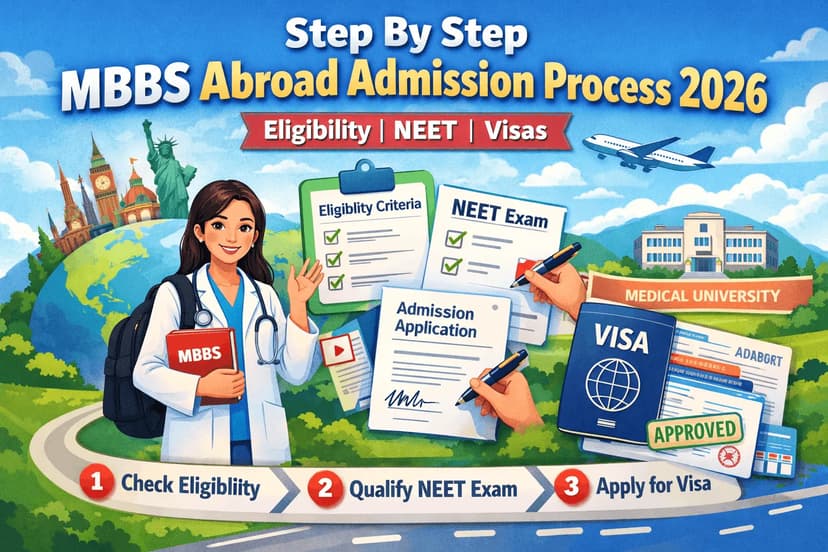
The decision to pursue an MBBS degree abroad is exciting but the admission process can often seem overwhelming for Indian students and parents. With multiple countries having varying requirements, a clear roadmap is essential to ensure a smooth transition. In 2026, the admission process remains highly structured around NMC guidelines, specifically the NEET qualification. This article breaks down the step-by-step admission journey from deciding your university to stepping foot on campus, ensuring you don't miss any critical deadlines.
1. Eligibility Criteria for MBBS Abroad (2026)
Before applying, students must ensure they meet the basic eligibility. The candidate must be at least 17 years old by December 31st of the admission year. Academically, general category students need a minimum of 50% aggregate in Physics, Chemistry, and Biology (PCB) in their 12th boards, while reserved categories need 40%. Most importantly, a valid NEET qualification score from the current or previous years is strictly mandatory to practice medicine in India later.
2. The Importance of NEET Qualification
Can you study MBBS abroad without NEET? The simple answer is no—if you plan to return and practice in India. The National Medical Commission (NMC) requires that every Indian student pursuing a medical degree overseas must provide a qualified NEET scorecard at the time of admission. This certificate acts as your No Objection Certificate (NOC) and ensures your eligibility for the FMGE/NEXT examination post-graduation.
3. Step 1: Research and University Selection
The first actionable step is choosing the right country and university. Focus on NMC-approved institutions situated in safe countries like Russia, Georgia, or Kazakhstan. Consider factors such as English-medium instruction, total budget, FMGE passing rates, and the presence of Indian communities. Imperial Overseas Consultants offers personalized counseling to help match students with the best-fit university based on these metrics.
4. Step 2: Document Collection and Application
Once the university is chosen, gather all necessary documents: 10th and 12th mark sheets, a valid passport, NEET scorecard, birth certificate, and passport-sized photographs. These documents often require apostille or translation, depending on the destination country. Submit your application directly or through a trusted consultant to ensure all formatting is correct and deadlines are met.
5. Step 3: Receiving the Admission Letter
After a successful application, the university will issue a primary Admission Letter or Offer Letter, usually within a week or two. This document confirms your conditional acceptance. Following this, you may be required to pay an initial seat reservation or registration fee directly to the university’s official account to secure your spot.
6. Step 4: Obtaining the Invitation Letter
The next crucial document is the official Invitation Letter issued by the Ministry of Education or Foreign Affairs of the host country. This process can take anywhere from 15 to 30 days as it involves government-level background checks and approvals. The Invitation Letter is mandatory for the visa application process.
7. Step 5: Visa Application and Processing
With the Invitation Letter in hand, you must apply for a student visa at the country’s embassy or consulate in India. Visa requirements typically include the original passport, official invitation, medical fitness certificates (often requiring HIV/TB testing), bank statements from parents/sponsors, and the visa application form. Visa processing times vary by country but generally take 1 to 3 weeks.
8. Step 6: Pre-Departure and Travel Arrangements
Once the visa is stamped, it's time to book flights, purchase student travel insurance, and pack. Attend pre-departure briefings offered by consultants to understand climate, currency exchange, what to pack (like warm clothes for Russia and Kazakhstan), and the university rules. Ensure all original documents are safely packed in your carry-on luggage.
9. Step 7: Arrival and University Registration
Upon arriving in the destination country, representatives typically greet Indian students at the airport and transfer them to the university hostels. The first few days are dedicated to clearing medical check-ups, signing hostel contracts, paying the remaining tuition fees, and obtaining local residence permits and student ID cards before classes begin.
10. How Consultants Simplify the Journey
Navigating university applications, international bank transfers, apostille processes, and embassy protocols alone can lead to costly mistakes and delays. Imperial Overseas Consultants handles the entire process end-to-end, providing transparency and guaranteeing that you step into your medical campus smoothly and safely.
Conclusion
Securing a medical seat abroad is a methodical process. By understanding the eligibility requirements and preparing documentation early, Indian students can successfully navigate the journey from application to arrival. Taking it step-by-step with the right guidance ensures a stress-free transition, allowing you to focus entirely on your ultimate goal: becoming a successful doctor.
Ready to Start Your MBBS Admission Process?
Contact Imperial Overseas Consultants today for a free assessment of your profile and step-by-step guidance to secure admission in top NMC-approved universities abroad.
Consult Our Admission ExpertsFrequently Asked Questions (FAQs)
Is NEET compulsory for MBBS abroad admission?
Yes, a valid NEET qualification score is strictly required if you intend to practice medicine in India after your studies.
How long does the entire admission process take?
From applying to receiving your visa, the entire process usually takes about 45 to 60 days depending on the country.
Do I need a passport before applying?
A valid passport is mandatory for receiving the official invitation letter and applying for the student visa. It's best to apply for it before starting the admission process.
Are there any entrance exams other than NEET?
Most universities rely solely on 12th-grade PCB marks and NEET scores, though a few may conduct basic online medical biology and English proficiency tests post-arrival.
Similar Posts
Imperial Overseas Consultants – Pathankot's Most Trusted MBBS Abroad & Study Visa Experts
By Imperial Overseas Consultants
5/1/2026 | 12 min read
How to Identify a Genuine MBBS Abroad Consultant in Punjab – Red Flags & Checklist 2026
By Imperial Overseas Consultants
5/5/2026 | 14 min read
Study MBBS in Russia 2026 – Complete Guide for Indian Students: Fees, Universities & Admission
By Imperial Overseas Consultants
5/7/2026 | 13 min read